Search

outdoorsmanblog.com

Category

hunting

Best All-Around Cartridge (for me) – Shane Jaeger

If a hunter were to own just one gun, to have just one caliber, what should it be?  This long-debated question has undoubtedly been the subject of countless hours of campfire discussion for more than a century.  Tales of hunting elephant with a .22, or a squirrel with a bazooka find their way into folklore.  Of course just because we can do something doesn’t mean we should.  Using adequate firepower capable of making the shots we encounter and cleanly putting game down is our responsibility as ethical hunters.  As hunters we know that the pursuit and the kill bring us closer to the animal. The respect fostered in this relationship requires us to make the best possible choices in equipment.

Factors determining the best all-around caliber are many.  First and foremost is the disclaimer that the absolute best caliber for any hunter is the one that they are most accurate with.  Without a well-placed shot, everything else written here is meaningless.  Beyond shot placement, the primarily factor informing caliber choice is the species a hunter intends to pursue. The answer will certainly vary between a New Mexico varmint hunter and those hunting a Maine Black Bear.  This article will focus on best all-around caliber choice for big game around the world, with the exception of dangerous game.

In order to qualify as a well-rounded caliber, it must be able to reach out across ridges for mountain goat, push a heavy bullet in the cover of moose country, and deliver enough energy down range to drop an Eland. The ideal would be a long, flat shooting caliber with the ability to deliver a range of bullets from 130gr to 220gr. While several cartridge families fit the criteria, few do it as well as the .300 magnums.

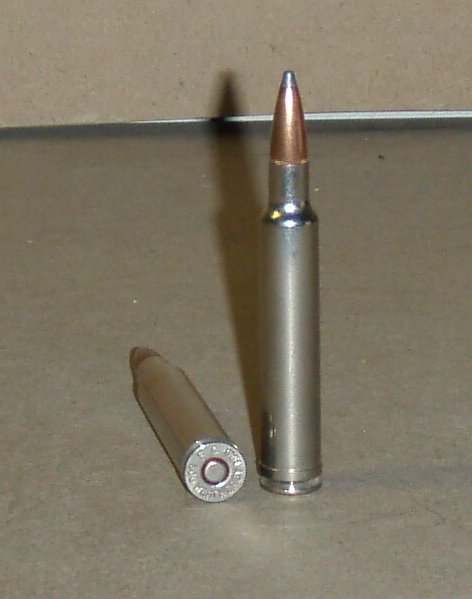
The surge in popularity of the .300 magnums, and development of several new ones, shows the increasing awareness that hunters have of their performance.  Available .300 magnum calibers include the Holland & Holland (H&H), Winchester (WIN), Weatherby (WBY), Dakota, and Remington Ultra (RUM).  There are also a host of short magnums produced to reduce recoil and provide a shorter bolt throw. It can be difficult to identify a stand out among all of these very similar cartridges.

The downside of any .300 magnum is recoil.  Since most experts agree that recoil of about 20 foot-pounds is where most shooters begin to flinch, it can be difficult to handle these formidable cartridges. However, for the dedicated hunter, the versatility of the caliber is worth training yourself to handle the recoil. Below is a chart comparing approximate felt recoil with an 8.5 – 9.0 pound rifle using an 180gr bullet.

.30-06 SPRG                  19 ft-lbs

.300 H&H                       23 ft-lbs

.300 WIN                        27 ft-lbs

.300 Dakota                   31 ft-lbs

.300 WBY                       33 ft-lbs

.300 RUM                      35 ft-lbs

The data in this table doesn’t however tell the whole story.  Working in concert with the force delivered from firing the rifle, is how quickly that force is delivered.  Generally speaking, the rounds listed above increase in speed (associated with powder capacity and steepness of the shoulder on the cartridge) as the pressure increases.

Recoil can be a significant factor in reducing accuracy. Anticipatory flinching is involuntary, and will absolutely destroy accuracy.  It is necessary to address methods of reducing felt recoil as well as training to reducing flinching.

A quality recoil pad is a great first step.  Premium recoil pads are designed to reduce felt recoil up to 70%. Depending on the make of your rifle, this can represent a significant improvement over the manufacturers pad or butt-plate.

The addition of a muzzle break (or porting of the barrel) can also reduce recoil up to 50% (with some manufactures claiming more).  While a break may add as much as 10dB to the report of a rifle, hearing protection can certainly be used, and the reduced recoil is a fair trade-off.

Once steps have been taken to reduce the recoil of your rifle, there are ways for a shooter to reduce the negative effects of flinching.  Exercises to create muscle memory help some shooters. Firing the rifle without live ammunition can be good practice.  Some shooters will do this without knowing which rounds are live in order to unmask the tendency to flinch.  Additionally, it is beneficial to allow the energy from shooting to pass through the body and not fight against it with rigidity.  Improving the response to the unpleasantness of recoil will improve any shooter’s accuracy, and being able to handle a .300 magnum will offer a hunter access to the most versatile calibers on the planet.

Within the .300 magnum family there is plenty of debate about which is best.  The Holland & Holland is praised as having lighter recoil while sacrificing very little speed down range and still maintaining a relatively flat trajectory.  It cannot however, reach out to the same distances with a heavy bullet as other options.  At the opposite side of the spectrum the Remington Ultra Mag. is sometimes described as an unnecessarily overpowered option.  Remington has even responded by offering the caliber in reduced loads that mimic the .30-06 and .300 Win. in trajectory.  This cartridge however enjoys the benefit of its power, being able to deliver a 180gr bullet with almost 2,200 ft-lbs of energy at 500 yards!

The most popular of the many options is the .300 Winchester magnum. You’d likely have no issue finding ammunition just about anywhere in the world, and a host of data is available for any load imaginable. The most popular however, is not always the best.

Because any of the .300 magnums will provide a hunter with the versatility to hunt any non-dangerous, big game animal on the planet, a hunter should weigh their preferences and needs.  My absolute “go-to rifle” is a .300 WBY.  Using lighter (130gr- 150gr) bullets the Weatherby can reach out to ultra-long ranges.  It is also able to deliver a 220gr bullet to good distances with tremendous energy.  While it is on the higher end of recoil among the .300 magnums, it is arguably the most versatile cartridge of a versatile family and we haven’t even discussed hand loading varying powder loads.

Not every hunter needs a rifle that can do everything that a .300 Weatherby, or any other .300 magnum can do.  It’s also true that not every hunter wants to sacrifice a collection of niche rifles for different situations, species and terrain.  It also bears mentioning once more, as everyone knows, that shot placement supersedes absolutely everything written here.  If we are, however, to select the best all-around caliber for big game, it would assuredly be in the .300 magnum family.  I truly love the Weatherby, and believe it to be the best for me, however I also believe that each hunter will decide which works best.

First Safari: Planning & Research – Shane Jaeger

My first safari was like the first real date with the girl of my dreams. I had dated before, as I had gone on hunts before, but this was different. I was excited, but nervous. The stakes seemed higher than ever before, and the anticipation was wonderful, but nearly unbearable. I eventual married that girl, and we shared our first trip to Africa together.

The first thing to know about an African plains game safari is that they are more affordable then commonly thought. The cost of my 10 day, 7 species hunt was less than many elk hunts in the states. Coupled with airfare and taxidermy the price certainly increases, however the bang-for-the buck of hunting in Africa, and in particular South Africa is unbeatable. Do not let the assumption of cost scare you away from what might be one of the best experiences of your life.

I spent countless hours reading outfitter websites, reviews, and stories about hunts from South Africa, Namibia, Botswana (when hunting was still open there), Zimbabwe, and even Tanzania. It soon became evident that South Africa provided the easiest travel and most affordable hunt for plains game available. There were locations throughout the country to consider with concentrations near Cape Town and Johannesburg. With more research I went on to narrow my search to the Limpopo province north of Johannesburg.

South Africa is very accustom to hosting hunters. Their laws, citizens, and airport are hunter friendly, and make the transport of rifles and other equipment easy, safe, and unintimidating compared to many other countries. Similarly, the exportation of trophies is a simple and smooth process. Trophy fees in South Africa do tend to be a little higher than some other countries, however this is offset by lower daily rates for guides and accommodations. I found this to provide for an unrushed experience, and an overall value that is unparalleled.

With a country and region decided upon I began the selection process for a guide & outfitter. There are many variables in the selection process. Most outfitters offer package deals with a variety of common game available. My first task was to determine deal-maker & deal-breaker conditions. I knew I wanted to hunt kudu, the Grey Ghost of Africa. Every package I considered had to have a kudu included. Impala was also high on my list, as was gemsbok. Narrowing my search to packages that included all three species removed a lot of the outfitters I was finding on-line, and a few ‘build-your-own’ packages became costly when including these and any other larger species.

I ultimately choose five outfitters to research more closely. On-line reviews and independent descriptions of the operations quickly narrowed the choice to three. After calling a few references for each, I was leaning toward one in particular. References were good for all three, but everyone described my top pick as fun, challenging, and an enduring memory. I wanted to be sure that I was hunting under true fair-chase conditions, and that we would have fun during the hunt and after. I also felt the value to be outstanding and decided to book a hunt.

Once booked, I was in semi-regular communication with the outfitter’s stateside representative. I received a packet of information and began reading about rifle importation and airline rules, equipment to bring, and other expectations for the hunt. It was intimidating at first, however everything was very straight forward and easy to follow.

Medical concerns were minimal as South Africa is malaria free, and emergency insurance is reasonable as Johannesburg has outstanding healthcare available. With the exception of carrying topical antibiotics for minor injuries or scratches in the field, very little concern was necessary. Other than basic toiletries we brought bug spray and sunscreen, but didn’t utilize either. The August trip was in late winter in the southern hemisphere, and any concern I had of tsetse flies was unfounded (not because of the time of year, but because South Africa doesn’t really have them). The cool nights and mornings kept snakes coiled in their layers. We didn’t see a single snake on the trip. Among the species that inhabit South Africa are the Black Mamba, Puff Adder, Boomslang, and several species of Cobra. I was more than pleased to not encounter any of them!

Once I had looked at the area’s environment, available game and laws, the hunt, the outfitter and the packages, I also looked into activities for non-hunting members of my expedition. My wife did hunt during the safari, and observed the hunt on other days. A friend of ours who accompanied us on this adventure also came as an observer several times. There were days however when the two ladies would head off on other adventures getting to know local customs and rituals, and photographing wildlife. I joined them one Sunday giving my PH the opportunity to attend church with his family. We rode elephants through a ranch and photographed the big five in the process! These side trips were very reasonably priced, and provide a great value added for families or others who may not be hunting every day.

The timeframe for planning this first safari was a little less than a year. I certainly spent ample time looking at outfitter websites before that, but I got serious in October of the year before we went. By December I had narrowed my search and contacted references, and I booked the hunt in late January for that year’s August. It is certainly possible to compress that timeframe, and many will spend more time than I did researching. I would recommend that a plains game safari be planned and booked a year in advance if possible. The planning and anticipation is half the fun! (That’s not really true… The hunting is way more than half the fun, but planning can be an obsessive and enjoyable too.)

Look for more postings about this safari coming up. It was a lot of fun and I filled multiple journals with stories about our time in the Limpopo province of South Africa.

Why I Hunt. – Shane Jaeger

I hunt because it is a part of who I am. I enjoy spending time in nature, and exploring the diverse outdoors from the bushveld of Sub-Saharan Africa to the boreal Canadian forests and barren mountains. I am not however, someone who would be content to “hunt for the rest of my life even if I never got another animal.” I do not harvest animals.  I pursue them, and outwit their senses and cunning. I kill them. It may not be universally popular to acknowledge killing as an end unto itself, but it is a part of hunting, and it is a strong motivator.

Death is a necessary component of life. Without death, life cannot exist. We have not evolved beyond carnivorous diets or beyond the instinct to hunt and kill our quarry. The misguided notion of those who believe that we have is the product of a social construct only decades old. It is part of a growing disconnect between humans and nature. One of the greatest shortcomings of industrial food production is the divorcing of food from its source. I do not hide the death of animals from my young children. In fact I involve them in the process of preparing meat from a carcass to the table in the same way that they are involved from seed to table in our garden. I believe they will be the better for understanding their food, and can make healthier decisions about what they put in their bodies.

Humans are apex predators through cunning. We have countless millennia of instinctual motivation as both a prey and predator species. The inner need to hunt is coupled with a wary eye that is best encapsulated during the pursuit of dangerous game. Our ancestors survived in a crucible of change that caused our brains to adapt and grow more powerful. We learned to anticipate the behaviors of our prey and predators. Eventually our tools allowed us to be masters of the food chain… Yet we remain physically week and reliant on our minds and our tools. The duality of this role heightens the experience of hunting. I pursuit of dangerous game we are both predator and prey. The experience is not comparable to any other.

“Why do you hunt?” I get asked this question a lot by my non-hunting friends. It is typically after enduring negative stereotypes about hunters. I used to be very defensive when I responded, because I did not share my passion with people readily. I am no longer reserved about my passion. I can no sooner deny hunting as a part of my identity then I can deny my receding hairline… It’s a part of who I am. I go on to answer their questions and often we debate maters of conservation.

As a science educator I am well versed in the biology of conservation. As a hunter I am well versed in the politics and funding of conservation. It always amazes me how people with very strong and emotional opinions can be so uninformed about a topic they claim to be passionate about. Dismantling superficial arguments and opinions is very easy, but often is not sufficient to sway the emotional connection to a belief. I am content to agree to disagree in these circumstances. It is not my job to convince everyone of my beliefs, but rather to proudly and unapologetically live my life. By all objective standards, quality game management and the political and economic support of hunters’ is an asset to species and environmental conservation.

Finally I hunt because it makes me a better father, husband, and son. Hunting is a social activity from planning, to execution, conversation, and eating!  My daughter will tell her brother about the trip to South Africa she is convinced we will take on her 16th birthday (here’s hoping I can make that happen financially… I still have 10 years of saving!). We look at the game species there and talk about the hunting methodologies used on such a hunt. My young son’s eyes light up when we walk through Cabela’s and he points to the taxidermy of animals that hang in our home. He proudly tells me the species and explains his plans to hunt those and so many more in the future. My father and I recently went pheasant hunting together on a brisk pre-Thanksgiving morning. I enjoyed eating the birds, but his company on the hunt and at the dinner table means more to me by far. And I cannot begin to describe the excitement I felt when my wife lined up on her first big game animal. I was way more excited than I can recall being on any of my own hunts.

I hunt because it is in the fabric of my being.

Blog at WordPress.com.

Up ↑